
Nutrition and hair: what the evidence does and does not say
Food matters for hair, but not always the way supplement ads say. A simple look at what is fairly well known — and what is not.
Everyday care6 min read
Doctor check: not yet — Dr. Anil Tyagi will check it before it goes live

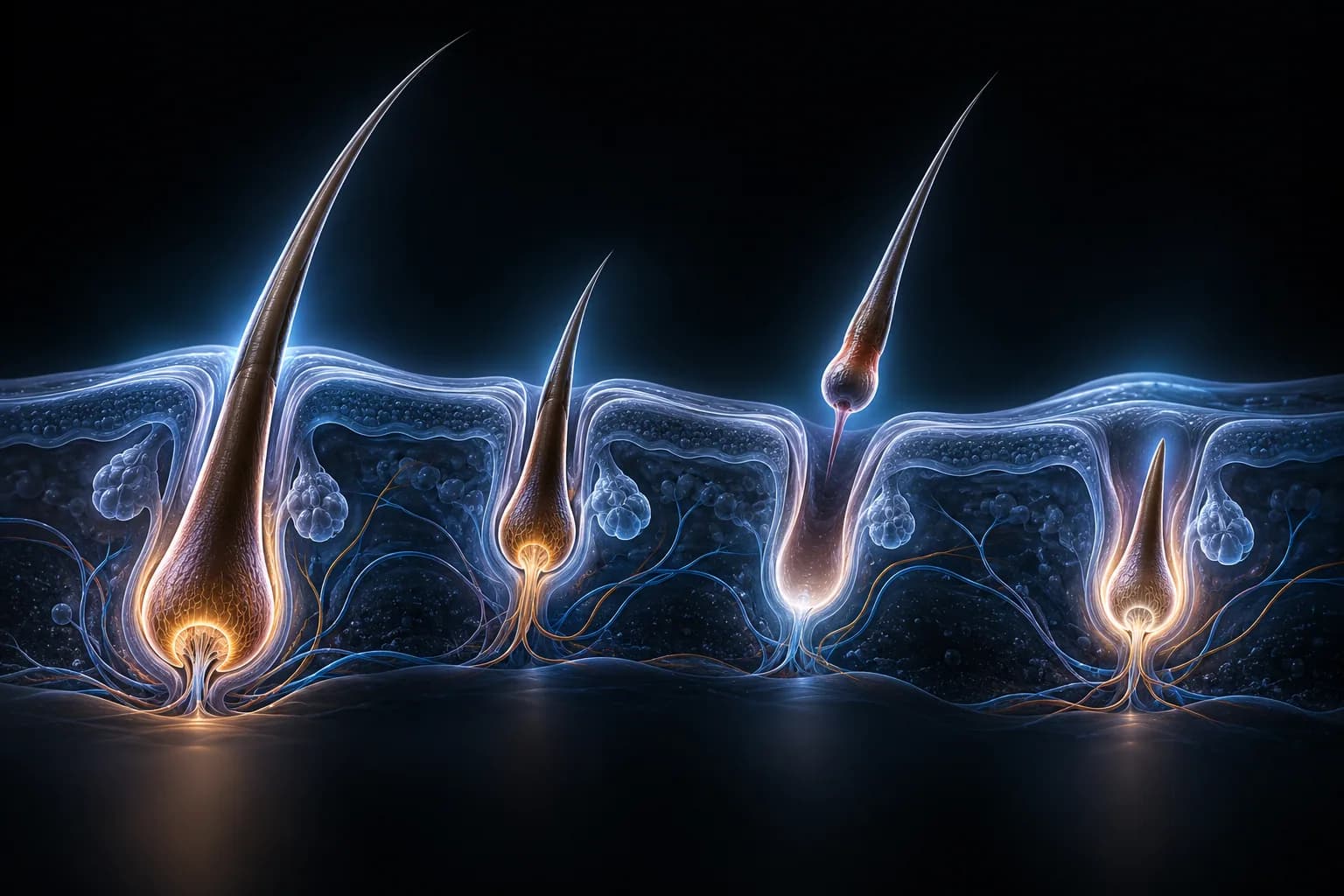
Illustrative image — not a treatment result.
Search for hair health online and you will find long lists of foods and supplements said to make hair thicker. The truth is smaller, and more useful: food can make a real difference when something is missing. But it is rarely the whole story.
What is fairly well known
Hair roots are among the busiest parts of the body. They need a steady supply of energy, protein, vitamins and minerals. When the body is short of something, hair can grow more slowly, or more can fall.
- Low iron is a known cause of short-term hair loss. The NHS lists low iron among its common causes
- Eating very little protein, crash diets or losing weight fast can cause heavy hair fall, usually a few months later
- Too little biotin, iron, protein or zinc can show up as clear hair loss, says the AAD
- Thyroid problems are not about food, but can look like it, and they also affect hair
In these cases, finding and fixing the real problem — with your doctor’s help — is what tends to work. The NHS says hair loss caused by a medical condition usually stops, or grows back, once you are well again.
What the evidence does not say
A review of diet and hair loss in the journal Dermatology Practical & Conceptual says low levels should be fixed. But it found little research on whether supplements help people whose levels are normal. Some supplements can even make hair loss worse or be harmful.
- Low biotin is rare. Biotin supplements can also upset some lab tests, including troponin, a heart test. Always tell your doctor and the lab if you take it
- Too much of some nutrients, such as vitamin A or selenium, has itself been linked to hair loss
- No single food or “superfood” has been shown to reverse pattern hair loss
- Food alone does not change the genes and hormones behind pattern hair loss
Everyday food that supports hair
You do not need a special diet. The same healthy eating that is good for your body is good for your hair:
- Enough protein through the day — dal, beans, milk and curd, eggs, fish, paneer or tofu
- Iron-rich foods such as leafy greens, beans and, if you eat it, meat — with some vitamin C to help your body take in the iron
- Plenty of different vegetables, fruit, nuts and seeds
- No crash diets, and no very fast weight loss
You may be more likely to run short of some nutrients if you are vegetarian or vegan, pregnant or breastfeeding, have heavy periods or a stomach or gut problem. Mention it on your health form.
Where supplements fit in a plan
At YHC, your plan includes a supplement only if Dr. Tyagi thinks you need it — based on your health, your diet and any test results. It is one part of a routine. It does not replace finding the cause.
When to see a doctor
- Hair fall that started after an illness, a baby, surgery or a big diet change, and has not settled
- Hair changes along with tiredness, feeling cold, breathlessness or pale skin
- You are thinking of high-dose supplements, or already take several
- You have a health condition, or take medicines, that could affect your nutrient levels
The next step
Food is one piece of the picture. The scan and consultation look at all of it — your roots, your health, your diet and any tests — and suggest what is worth doing. Individual results vary.
Sources
- 1.Diet and hair loss: effects of nutrient deficiency and supplement use — Guo & Katta (opens in a new tab)
Dermatology Practical & Conceptual · 2017
- 2.Telogen Effluvium — Hughes, Syed & Saleh (opens in a new tab)
StatPearls (NCBI Bookshelf) · 2024
- 3.
- 4.Hair loss: who gets and causes (opens in a new tab)
American Academy of Dermatology
- 5.Biotin interference with troponin lab tests (opens in a new tab)
U.S. Food and Drug Administration · 2022
Figures are general information from published sources and vary between studies. They are not claims about any YHC product.
Information on this site is for general education and is not a substitute for medical advice. Treatment is prescribed only after a consultation. Individual results vary.